Language Learning - Duo Speak
- 4.4
- Rating
- 1.00M
- Installs
- Free
- Price
 Analysis by App-foxy
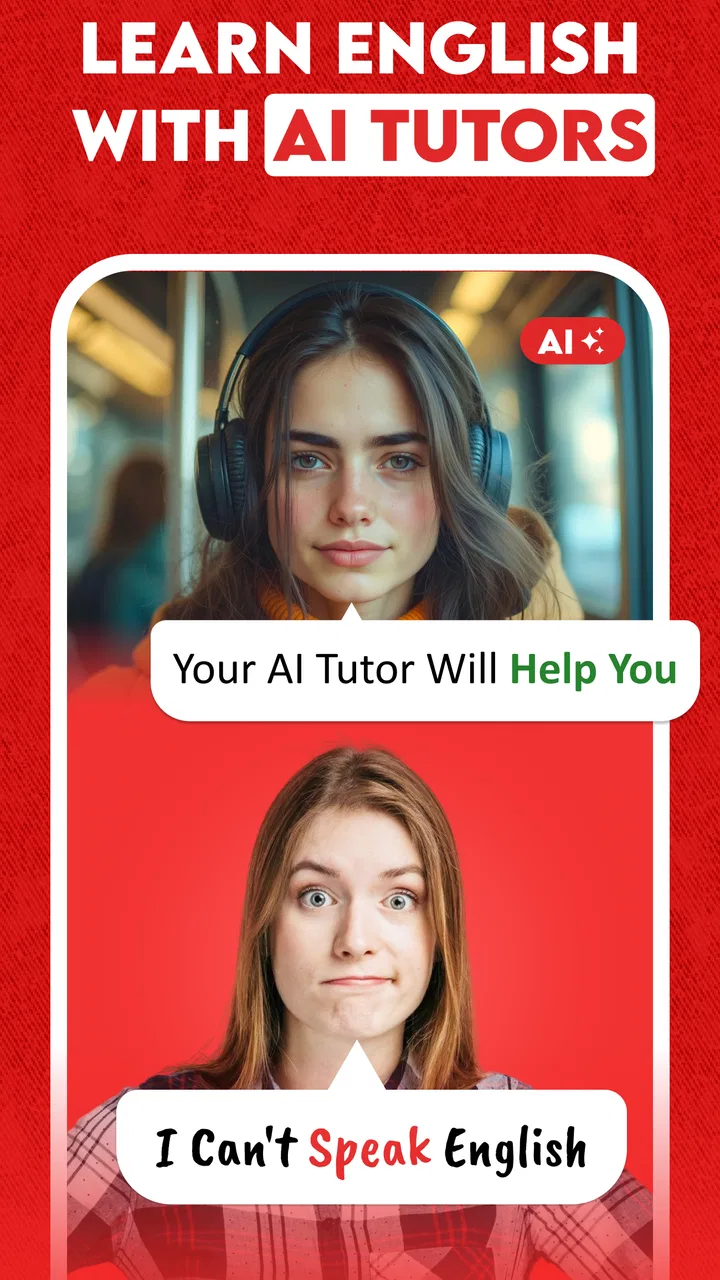
I found Duo Speak most useful when I treated it as a speaking partner rather than another vocabulary drill. This free education app from Visionary AI is built around practicing English with an AI tutor, and that changes the feeling of a study session: instead of only choosing answers, I have to produce language and keep a conversation moving. For a first-time learner, that can make the jump from recognizing English to actually saying it feel much less intimidating.
The app is available for everyone and works on Android devices running version 8.0 or later. It has already passed the one-million-install mark and holds a 4.4 average from roughly nine thousand ratings, so it is not an obscure experiment. Still, popularity is not the same as a perfect fit. I would recommend it most strongly to learners who need regular speaking practice and want a low-pressure place to make mistakes. Someone looking for a complete course with a carefully sequenced grammar syllabus may need to pair it with a more structured alternative.
What a first session with Duo Speak feels like
The first thing to understand is the app’s role. It is not simply a translation tool, and I would not use it as my only reference for grammar, pronunciation theory, reading, or writing. Its clearest purpose is guided English conversation. You open it when you want to form sentences, respond to prompts, and become more comfortable speaking aloud.
You May Also Like

 Blood Strike: 2.5 Anniversary
Blood Strike’s Loadouts Turn Every Drop Into a Tactical Gamble
A close look at Blood Strike’s custom loadouts: how fast access to signature weapons reshapes its battle royale rhythm, rewards preparation, and narrows the gap between fights.

 Pandora - Music & Podcasts
Pandora’s Music Is Easy to Start, but Harder to Recover
Pandora’s strength is its low-effort path from a seed to a station. Its weak spot is how much confidence it asks you to place in connection, setup, and quiet recovery.

 8 Ball Pool
 Is Built on Rivalries, Rematches, and Routine
A close look at the rivalries, rematches, shared routines, and unanswered safety questions that turn a quick pool match into a persistent mobile community.

 Samsung Music
’s Quiet Strength Is Playing What You Already Own
Its reach comes less from spectacle than from dependable access to a personal library. That simplicity is both the app’s strongest retention engine and its ceiling.

 AccuWeather: Weather Radar
AccuWeather Review: A Quick, Clear Forecast for Everyday Decisions
For everyday plans, the best forecast is the one you can understand quickly. AccuWeather makes rain timing, radar, and local conditions easy to act on, with a few trade-offs.

 Hill Climb Racing
Why Hill Climb Racing Still Turns Crashes Into One More Run
A tiny car, a bumpy hill and one more upgrade: Hill Climb Racing keeps resurfacing because its simple chaos makes every near-miss feel personal.
More From Our News Desk



That focus makes it especially practical for people who understand more English than they can comfortably say. Many learners can follow a video or recognize familiar phrases but freeze when asked a basic question. A conversational tutor gives you a chance to rehearse that moment privately. I found the private setting important because it removes the social pressure of speaking with a teacher or another learner before I feel ready.
The experience is also more useful when I set a narrow goal before starting. “Improve my English” is too broad for one sitting. A better target is something like explaining my morning routine, practicing a short introduction, or preparing phrases for a conversation at work. With a specific situation in mind, the AI exchange becomes easier to judge: I can notice whether I am answering more quickly, using complete sentences, or relying less on translation.
The free entry point makes trying that workflow straightforward, although the app also offers in-app purchases ranging from $2.99 to $59.99 per item. I would begin without paying and first decide whether the speaking format fits my habits. The important question is not whether more practice could be useful; it is whether I will actually return often enough for the extra purchase to matter.
Setting up without overthinking the first lesson
After installing the app, I recommend resisting the temptation to search for the perfect study plan immediately. Start with the simplest available speaking activity and use it to learn how the tutor responds. Pay attention to where the app asks you to speak, how it presents the next prompt, and whether you feel comfortable answering at your natural speed.
A quiet place helps, particularly during the first attempt. Background noise, a hesitant microphone, or speaking so softly that your words are difficult to recognize can make the session feel harder than the English itself. I would use headphones if they make the conversation easier to hear, but the main improvement usually comes from choosing a calm moment and speaking clearly rather than rushing.
It is worth beginning with language you already partly know. If you choose a topic that is far beyond your level, every pause can feel like a failure. Instead, prepare a small mental bank of familiar ideas: where you live, what you do during the day, what you enjoy, or why you are learning English. The goal of the first session is not to demonstrate fluency. It is to complete a short exchange and leave knowing exactly what to practice next.
I also suggest keeping a note outside the app for phrases that repeatedly slow you down. Do not try to record every correction or unfamiliar word. Choose two or three useful expressions from a session and reuse them later. This creates a simple loop: speak, notice a gap, save a practical phrase, and speak again. That workflow is more effective for me than collecting a long list that I never bring back into conversation.
The first meaningful success is completing an exchange
For a new user, the first real success should be modest: answer a prompt in English, continue after a follow-up, and finish the interaction without immediately switching to translation. That may sound small, but it tests the exact skill many passive study methods leave untouched. I would count a session as successful even if the sentences are basic and imperfect.
One realistic example is preparing for a short workplace introduction. Before opening the app, I would decide on three points: my name, what I do, and one task I am working on. I would answer naturally rather than reading a prepared paragraph. If the tutor asks something unexpected, I would try a simpler response instead of stopping. Afterward, I would repeat the introduction once more, using a clearer version of any sentence that caused trouble.
The same method works for travel situations. Practice saying what you need, asking for clarification, and responding when the other person does not understand immediately. The value is not memorizing one flawless dialogue. It is learning to keep communicating when your first sentence is incomplete. That recovery skill is often more important in everyday English than knowing an impressive collection of isolated words.
A useful habit is to speak in short units. Beginners sometimes attempt a long sentence because they want to sound advanced, then lose control halfway through. With an AI tutor, there is no reason to perform. Say one idea, listen to the response, and add the next idea. Once that feels comfortable, combine the parts. This makes progress visible and gives you a repeatable way to handle difficult topics.
I would also repeat the same topic on separate days instead of always chasing novelty. The first attempt reveals missing vocabulary. The second gives you a chance to use it. A later attempt can show whether your answers arrive more naturally. That repeated-topic approach is one of the less obvious ways to get more from a conversational app, because improvement becomes easier to notice than when every session uses completely different material.
Where beginners may become confused
The biggest possible misunderstanding is expecting an AI conversation to behave exactly like a human teacher. An AI tutor can provide practice and keep an exchange going, but I would still treat its responses as guidance rather than the final authority on every nuance of English. When a sentence matters for an exam, professional document, or sensitive situation, I would verify it with a trusted grammar reference or qualified teacher.
Another source of confusion is the difference between correction and communication. A sentence can be understandable while still sounding unnatural. Conversely, a more polished alternative may be unnecessary for a simple conversation. I try to ask myself what I actually need: to be understood, to sound more natural, or to learn the grammar behind the sentence. Those are different goals, and an AI speaking session is strongest at the first two when I actively reflect on them.
Pronunciation practice can also feel inconsistent if I speak too quickly, swallow word endings, or use a noisy room. When a response seems wrong, I do not automatically assume the app has judged my English accurately. I repeat the sentence slowly, separate the words, and try a shorter version. This troubleshooting habit prevents one unclear recognition result from discouraging me.
There is a temptation to treat every unfamiliar word as something that must be mastered immediately. I think that is inefficient. If a word is not useful for the situation I am practicing, I let it go for now. I focus on expressions I can imagine using during the week. For example, a phrase for asking someone to repeat themselves may deserve attention sooner than a rare descriptive adjective, even if the latter looks more advanced.
The purchase options create another decision point. Since the app is free to start, I would not subscribe or buy an item simply because I completed an enjoyable session. I would first use it consistently, identify what the paid access would change for my routine, and check whether that difference addresses a real limitation. The listed purchase range is broad, so the sensible choice depends on the specific offer shown in the app and how often you expect to practice.
How it compares with familiar language-learning alternatives
Compared with flashcard apps, Duo Speak gives me a better reason to retrieve language in complete sentences. Flashcards are excellent for building recognition and reviewing words efficiently, but they can create the illusion that knowing a translation is the same as being able to speak. I would use flashcards for memory work and this app for turning that memory into an answer.
Compared with a traditional language course, the app feels less like a fixed classroom path and more like a flexible practice room. A course is usually better when you need lessons arranged in a deliberate order, explicit grammar explanations, homework, and a clear sense of progression. Duo Speak is more appealing when your immediate problem is hesitation. It lets you practice a situation when you need it instead of waiting for a textbook chapter to reach it.
Compared with speaking to a human tutor, the obvious advantage is convenience and privacy. You can rehearse without arranging a lesson or worrying about embarrassing pauses. The trade-off is that a human can understand your personal goals, notice subtle communication habits, and explain why one expression suits a particular context. I would choose the AI tutor for frequent low-stakes practice and a human teacher when I need detailed correction, accountability, or preparation for an important assessment.
Compared with a translation app, this is a better choice when the aim is independence. Translation is valuable when you need an immediate answer, but it can keep you in the role of converting sentences rather than creating them. I would still use translation for emergencies or unfamiliar information. For building the habit of thinking and responding in English, active speaking practice is the more useful tool.
Who will benefit most, and who should look elsewhere
I think the strongest audience is the learner who already knows basic English but avoids speaking. It is also a good match for someone with an irregular schedule, because a conversational exercise can fit into a short break without the preparation required for a live lesson. People preparing for everyday interactions—introductions, travel, casual conversation, or simple work exchanges—can turn those situations into focused practice.
It may be less suitable for a complete beginner who needs every sentence explained from the ground up. If you cannot yet understand simple prompts, a visual beginner course or teacher-led program may provide a gentler foundation. I would also look elsewhere if your main goal is advanced academic writing, detailed pronunciation analysis, or a formal exam curriculum. Speaking practice can support those goals, but it does not replace the specialized preparation they require.
Learners who dislike speaking aloud may also struggle to get value from it. The app’s central benefit appears only when you actively answer, not when you silently read through a session. If you prefer quiet study, reading practice, or written exercises, another education app may feel more natural. On the other hand, if your fear of speaking is the reason you avoid language learning, the private AI format is precisely what makes it worth trying.
A practical routine after the first week
Once the first session feels familiar, I would use a three-part routine. Begin with a topic you can handle, move to one question that forces you to explain something, and finish by repeating a response that felt awkward. This keeps the session balanced: confidence first, challenge second, consolidation last.
Do not measure progress only by how many new words appear. I pay more attention to whether I can answer with fewer long pauses, repair a sentence after making a mistake, and continue when the conversation changes direction. Those are signs that practice is becoming usable. A learner who can communicate simply and recover calmly is often further along than someone who knows more vocabulary but cannot produce it under pressure.
Another advanced but practical approach is to create a personal “repair set.” Save expressions such as asking someone to repeat a question, buying time, correcting yourself, or saying that you do not know the right word. Practice these deliberately in the app. They are not glamorous phrases, but they keep real conversations alive and reduce the panic that comes with forgetting a word.
I would also alternate between prepared and unprepared speaking. Prepared topics let you improve accuracy and confidence. Unprepared prompts test whether the language is becoming flexible. If you only rehearse scripts, you may sound comfortable until someone asks a slightly different question. If you only improvise, you may never polish recurring mistakes. The combination gives the app a more realistic role in your study plan.
Version 9.6 is the current version, and the app was released on October 18, 2022. Those details matter less to my daily judgment than the basic experience: it is an established, actively used speaking-focused education app, not merely a phrasebook. I would still keep expectations practical. It can help you practice producing English, but your results will depend on how deliberately you speak, review, and return to difficult situations.
My recommendation after using it as a learner
I would recommend Duo Speak to a friend who says, “I understand English, but I cannot get the words out.” Its strongest quality is the way it lowers the cost of trying. You can test an answer, make a mistake, try again, and build a little more comfort before taking that skill into a conversation with another person.
I would not present it as a complete replacement for a course, teacher, dictionary, or translation tool. The best results come from giving it a specific job: repeated speaking practice around situations you genuinely expect to face. Use another resource when you need systematic grammar, human explanation, formal writing feedback, or exam strategy.
My suggested path is simple. Install the free app, choose a familiar topic, speak in short sentences, and aim to complete one exchange rather than sound perfect. Note only a few useful phrases, repeat the topic, and wait before considering an in-app purchase priced from $2.99 to $59.99 per item. If that routine makes you more willing to speak, the app is doing something valuable. If you want a fully mapped curriculum or detailed expert correction, you will probably be happier using it alongside a more structured option rather than relying on it alone.
For me, that balance is the honest reason to try it: not because an AI tutor can solve every part of English learning, but because regular, private speaking practice can remove one of the hardest barriers to progress. When the goal is to move from knowing English to using it, that is a meaningful place to begin.
FAQs for Language Learning - Duo Speak
01What is Language Learning - Duo Speak?
Language Learning - Duo Speak is a mobile language-learning app designed to help users practice vocabulary, pronunciation, listening, and everyday expressions through short, interactive lessons. Its format is intended for both beginners and casual learners who want to study in small sessions. Before downloading, keep in mind that the available languages, lesson structure, and learning tools may vary depending on the app version and device platform.
02Which languages can I learn with Duo Speak?
The languages available in Duo Speak depend on the current app catalog, your device region, and sometimes the selected learning language. The app is generally aimed at learners who want practical communication skills, but not every language may offer the same number of lessons or features. It is worth checking the official store listing after installation to confirm whether your preferred language and course level are supported.
03Is Language Learning - Duo Speak free to use?
Duo Speak may offer free access to some learning content while reserving additional lessons, practice modes, progress tools, or an ad-free experience for premium users. The exact pricing and restrictions can change, so users should review the subscription information shown in the Google Play Store or Apple App Store before starting a trial. Also check renewal terms if you activate a paid plan.
04Does Duo Speak require an internet connection?
An internet connection may be needed for downloading lessons, synchronizing progress, displaying advertisements, processing certain pronunciation activities, and accessing account-related features. Some content could remain available temporarily after it has been loaded, but offline functionality should not be assumed for the complete course. If you plan to study while traveling, test the lessons you need before leaving Wi-Fi or mobile coverage.
05Is Duo Speak suitable for complete beginners?
Duo Speak can be useful for complete beginners because its lessons are presented in short, manageable activities and focus on practical language practice rather than long academic explanations. However, the experience may feel more effective when combined with regular review and real listening or speaking practice outside the app. Users seeking advanced grammar, professional terminology, or structured certification preparation may need an additional learning resource.
Pros
- Short speaking exercises make practice easy to fit into a busy schedule.
- Audio-based lessons help improve pronunciation and listening confidence.
- Progress tracking can encourage consistent daily practice.
- Useful for learners who prefer practical conversation over grammar drills.
- Clean interface makes the main learning tools easy to find.
Cons
- Some advanced lessons or features may require a paid subscription.
- Speech recognition can misjudge accents or answers in noisy environments.
- The course may feel limited for learners seeking detailed grammar explanations.
- Repeated exercises can become monotonous after extended use.
- An internet connection may be needed for parts of the learning experience.

Language Learning - Duo Speak
Gallery